Showing posts with label documentary. Show all posts

Saturday, July 26, 2025

art review: The Beatles in India


by Allan Tong

"I need to find myself," Paul Saltzman proclaimed in late 1967. Life lacked meaning for the 24-year-old Toronto filmmaker. Only India attracted him, and by chance he caught wind of a documentary crew needing a sound man to record there. So, what if never recorded audio? He bluffed the job interview, begged someone to teach him sound and, with $200 in his pocket ($1,800 today), Paul flew to New Delhi on December 4. 

During the filming of Juggernaut somewhere near RajasthanPaul received a letter from his girlfriend back home. She wrote she was breaking up with him and, even worse, was moving in with another guy. A knife plunged into his heart. Screams gripped his skull. Then, one of the crew members suggested he try meditation to ease the heartbreak.

In early February, Paul journeyed to Rishikesh in northern India, nestled in the foothills of the Himalayas, so he could study under Maharishi Mahesh Yogi, one of the world's most famous gurus. In fact, The Beatles' embrace of the Maharishi put him in the spotlight. Though Paul had attended a Beatles concert in Toronto back in 1964, he wasn't a huge fan and didn't know the band were in Rishikesh. In fact, Paul couldn't enter the ashram because The Beatles were there. He had to wait eight days before he was allowed in.

 "I was taught meditation in five minutes, and I did meditation for 30 minutes. It was a complete miracle. The knife in the heart was gone. The screaming in the head was gone. I was in a state of bliss."


After a few days, The Beatles started chatting and joking with Paul. One day, he was sitting with John when the head Beatle asked, "So, what are you doing here?" Paul revealed his heartbreak.

Replied Lennon, "Ah, yes, love can be very hard on us, can't it, Paul?"

"Yes," agreed the Canadian.

Lennon looked away, then glanced back and said, "You know, the great thing about love is you always get another chance."

Lennon's reassuring words were a gift, but Paul could not have known that Lennon himself was probably talking about himself. Lennon was secretly in love with a new woman, Yoko Ono, and would soon leave his wife, Cynthia, who was part of the ashram here. Paul had noted the icy distance between the married couple in the ashram.

Paul's other key memory of that week happened when he was sitting alone with George Harrison. "I'm just going to practice the sitar," said The Beatle who had introduced his band mates to meditation and helped launch Indian music in the West. "Do you want to come?"

Recalls Paul, "We go to his small meditation room, small, like our knees are almost touching. He picks up the sitar. Everything else was white, except the wood on the sitar. He starts to play and I close my eyes. It was a transcendent experience. I don't know if he played 10 or 40 minutes. It was timeless. As he finished playing, I opened my eyes, and I could see energy in the room--I had never seen that before--because I was in a state of bliss."

With no trace of ego, Harrison then said, "The Beatles have all the money you can dream. We have all the fame you could wish for. But it isn't love. It isn't health. It isn't peace inside." 

Paul chokes back tears as recalls that moment to a room full of people who've come to view his photographs of The Beatles in Rishikesh 57 years later in Toronto. "That was life-changing. He was a man of profound humility. True humility is recognizing your size in the universe.


Paul was speaking at a special reception hosted at the splendid Space* / Markham Street Gallery in downtown Toronto on a humid early evening on July 24. Many of his 54 photos of the Beatles adorn the walls on one floor of this new gallery. There are photos of John and Paul in white kurtas and sandals as they strum guitars, of Ringo aiming his 8mm home movie camera, of George relaxing in the shade. Photos capture some of the Beatles' celebrity entourage, including Donovan, Beach Boy Mike Love, Mia Farrow and her sister, Prudence, who inspired John Lennon to write The White Album ballad, Dear Prudence. They all came to literally to sit at the feet of the Maharishi, as captured in the exhibit's centerpiece.


Paul didn't unearth the photos for 30 years until his daughter, who became a Beatles fan, learned that her had met The Beatles and wanted to see the images. Since 2000, Paul has exhibited the photos around the world, published books, and made a film about his fateful week. He's been organizing 16-day tours across India to Rishikesh (22 days including a pilgrimage to Bhutan), even at the age of 82. When he first showcase his photos in the early 2000s, The Beatles legally challenged Paul, who later won. By 2005, at least Ringo had changed his tune--he signed several photos (all bought by a local collector, confirms a Space* manager.)   

Paul never thought of asking the band for autographs, but gained their permission to snap a few photos.The images are significant, because they captured the most influential band of their era about to enter a new phase of their careers. Only five months earlier, the band had lost their manager, Brian Epstein to an accidental overdose of sleeping pills. They left London as they were about to launch their new company, Apple, to protect their earnings from Britain's punitive supertax of the time, but would ironically  destroy the band. In mid-February 1968, their Magical Mystery Tour, was riding the top of the American album charts, while the revolutionary Sgt. Pepper's Lonely Hearts Club Band was still in the top 20, nine months after release. Despite this material success, The Beatles, led by George and his wife Pattie, sought spiritual peace thousands of miles away in the hills of India. 

Only twice did Paul Saltzman pull out his Pentax, capturing the Beatles at their most relaxed and unguarded. They are unshaven and smiling. They play music in the sun and shade. The pressures of being a Beatle are miles away. The riffs and songs that John, Paul and George composed in Rishikesh wound up on the celebrated White Album nine turbulent months later. There's no trace of psychedelia in these images, no hint of the furor that will arise later in 1968: The Beatles fighting in the studio, Apple bleeding money soon after lauching, and the public turning against John and his new soulmate, Yoko.

Paul Saltzman's photos capture The Beatles in their last moment of group unity, when the sky remained limitless.


Friday, September 20, 2024

film review: Russians at War


Directed by Anastasia Trofimova

Written by  Anastasia Trofimova & Roland Schlimme

ChinoKino review: A

Reviewed by Allan Tong


First of all, Russians at War is an anti-war documentary, not propaganda.  

For 129 minutes, this film depicts a squad of Russian front line soldiers and medics who are demoralized by their country's war against Ukraine. The soldiers, ranging from their early-twenties into their fifties, see no point to the fighting, are given few or no orders when entering battle, drink constantly, and distrust Russian state media and their leaders. Some just want to collect a paycheque. Others want to go home. 

Malaise overhangs the film. One soldier complains that he and his comrades are being sent into battle with no information like "blind kittens." Another points to the old U.S.S.R. hammer-and-sickle insignia in his tank. (This means the tank was manufactured over 33 years ago.) Yet another points to a Russian newspaper and TV broadcast and urges the camera not to believe either. A 50-year-old soldier risks prison by leaving the front line to see his wife and children in Moscow. A widow stands over the grave of her loved one and openly questions the war.


In one scene, Russian soldiers are packed into a truck heading somewhere into battle, and a few are chugging from an open bottle. It recalls news footage from 1968 when U.S. soldiers smoked pot as they combed the jungles of Vietnam. Both groups of soldiers didn't know what they were fighting for. The difference is that U.S. networks broadcast their soldiers' sentiments every night which soured American opinion and helped end that unjust war. The Russian war lacks this uncensored footage. Russians at War offers a rare glimpse of the Russian front lines as they are, which makes this film essential viewing.

These are the facts: Russia invaded Ukraine in February 2022 and continues to ravage that country in an unjust war. Secondly, the word "war" is uttered many times in this film, which is a punishable offence  in Putin's Russia. For this reason alone, there's no way Russians at War can screen in the country where its subjects live. To call this documentary propaganda is to be deaf and blind.

Director Anastasia Trofimova was reporting for the CBC when Russian invaded Ukraine. Benefiting from the chaos at the front and the endemic confusion that paralyzes the Russian army, she embedded herself with a squad. During her Q&A after the second screening at the TIFF Lightbox last Tuesday, Trofimova explained that she hid in the woods whenever commanding officers inspected, and when she was caught they chewed her out. She never obtained official press credentials in her seven months of shooting and, as the footage shows, risked her life to capture it.

The documentary is shown largely in a fly-on-the-wall, verite style. The director inserts a voice-over here and there purely to add context. At times, she questions a soldier. She asks one whether he believes Russian soldiers are committing atrocities. He denies it. This same young soldier is gung-ho about killing Nazis in Ukraine. It's clear to the audience that he has swallowed Vladimir Putin's brainwashing. Another soldier turns militant after seeing footage of a wounded comrade begging for a drone not to kill him, but it shoots him anyway. Does this scene engender sympathy for the dead Russian soldier? Yes. Does either scene compel me to cheer Russia and vilify Ukraine? No.

"Hundreds of instances over verbal abuse" including threats of violence and sexual abuse against TIFF staff forced the festival to postpone screenings. Those were originally scheduled to take place at a 14-screen multiplex at the height of the fest, TIFF CEO Cameron Bailey explained at a somber introduction before the Tuesday screenings. These took place at the TIFF Lightbox, a building far easier to secure. Indeed, there were many police and security guards on hand, stretching from the sidewalk on King Street where an angry protest raged, to the stage of cinema 2. In an unprecedented move, Russians at War was shown as the last screening of the venerable festival, two days after it ended.

How did we we come to this?

Thursday, March 14, 2024

film review: They Shot The Piano Player


Directed by Fernando Trueba and Javier Mariscal

Written by Fernando Trueba

Review by Allan Tong

ChinoKino score: B+

This is a stunning, but flawed animated docu-drama about legendary Brazilian jazz pianist, Francisco Tenório Jr. who disappeared in 1976 after a gig. He was 34. You probably never heard of him, but Tenório Jr. he played a role in elevating bossa nova to world status in the 1960s and 1970s.

Part detective story and part history lesson about this wonderful music but also the totalitarianism that strangled South America, They Shot The Piano Player is told from the point of view of a writer. New Yorker Jeff Harris is researching a book about boss nova when he stumbles upon Tenório Jr.s' masterful playing and is hooked. He proceeds to interview the pianist's close friends, bandmates and family in and around Rio de Janeiro as well as Buenos Aires where Tenório disappeared. 

These include bossa nova's godfather, João Gilberto, as well as Caetano Veloso, Gilberto Gil, Vincius de Moraes and Paulo Moura. Their music is liberally heard throughout the film in dazzling, colourful sequences. Pure pleasure. Altogether, they tell the story about boss nova's rise until it broke internationally through in 1964, even challenging the Beatles on the charts.

Harris spends equal time, if not more, learning about the U.S.-backed military regimes which terrorized Brazil and Argentina in the 1970s. Credit the film for not pulling any punches. A harrowing sequence finds Harris touring Buenos Aires' ESMA (Navy Mechanics School), a notorious place in the 1970s where political prisoners (mostly innocent) were tortured and execute. Appalling, ESMA had a ward for pregnant prisoners.

A sequence involving jazz great Ella Fitzgerald is a highlight

Eventually, Harris solves the mystery of Tenório Jr.'s disappearance. The problem is that this moment is not a revelation. The audience has a good idea of what happened long before the ending, which is a key flaw in this film. It lacks suspense. Perhaps the directors got too close to the subject, but the film could have been more powerful after another edit to shuffle scenes and gradually build to this reveal.

Another concern, though not a dealbreaker, is why the filmmakers created the Harris character to tell this story. Was it necessary?

That said, this is a highly enjoyable film of a worthy subject.

They Shot The Piano Player opens March 15 in Toronto, Montreal and Quebec City; March 22 in Ottawa, Saskatoon and Victoria; then throughout the spring in other cities.

Wednesday, December 20, 2023

film review: Anselm (3D)


Directed by Wim Wenders

ChinoKino score: B+

Review by Allan Tong

Wim Wenders returns to the 3D documentary form with a portrait of German painter/sculptor, Anselm Kiefer. Few will know his name outside the art world, though Kiefer has a celebrated body of work spanning half a century.

Kiefer peaked in the 1980s after retrospectives in Chicago and New York where critics heralded that “America has a new superstar.” His sculptures and giant canvases made of materials like straw, ash and clay, depict barren fields and empty rooms. They are moody and haunting. Some evoke (some say, provoke) Germany's Nazi past, such as his photos posing in the Nazi salute. Kiefer's intent is to force the German public to confront its dark past, though the film deflects accusations that these images can be misconstrued as pro-fascist.

As with his previous, stunning 3D documentary, Pina, Wenders does not editorialize nor intrude with narration or with titles on screen. Instead, he presents vintage footage of Kiefer, seamlessly blended with contemporary footage of the 78-year-old, intercut with that of his adult son, Daniel, portraying a younger Kiefer.

The documentary flows elegantly and in 3D offers a feast of visuals. You can see in dazzling detail for miles across a snowy forest illuminated by sunlight. The 3D opens up the detail in Kiefer's artwork, particularly his sculptures. 

That said, I would have liked to have seen more biography on Kiefer and other voices to comment on his work. Anselm is entirely seen from the artist's point of view, presumably to let his art speak for itself. Indeed, the 3D format presents his work in the finest way, far better than any future TV screening will.

Released by Mongrel Media, Anselm opens December 22 in Toronto, Vancouver and Montreal.

Thursday, December 14, 2023

film review: Immediate Family


Directed by Danny Tedesco

ChinoKino rating: B

Review by Allan Tong

This music doc is the logical and spiritual sequel to Danny Tedesco's impressive The Wrecking Crew from 2008. Both films profile groups of top session musicians, unsung heroes in the L.A. rock business who reflect on their past glories. Immediate Family are drummer Russ Kunkel, bassist Leland Sklar, and guitarists Danny Kortchmar and Waddy Wachtel.

Starting in the early 1970s, they as individuals performed on landmark albums, including Carole King's Tapestry, James Taylor's Sweet Baby James, Joni Mitchell's Blue, and into the late-1980s played for many stars, such as Neil Young, Keith Richards and Don Henley. They also went on tour with some of them, like Wachtel for Linda Ronstadt in her heyday. Hands-down, these are top-notch players and they step out of the shadows and into the spotlight in this enjoyable film.

If you've seen Tedesco's previous doc, you know what to expect. Interviews are generous as are music clips, over 80 in fact. Phil Collins, Stevie Nicks, David Crosby, Jackson Browne, Lyle Lovett and producer Peter Asher are among the parade of rock legends who sing the Family's praises. It's entertaining to hear tidbits like the one of headstrong Wathtel insisting on a guitar solo to replace a planned saxophone one in Steve Perry's hit, Oh Sherrie (a good call). Another highlight sees Wachtel recalling Linda Ronstadt singing her way into a strip joint in the middle of nowhere while on tour, because she wasn't carrying any I.D. to get past the door.

In fact, the entire film is fun and nice. Perhaps too nice. Apart from a brief mention of butting heads in the studio, the Family come across as nice guys. But the music business is a place notorious for clashing egos and where sex, drugs and greed rule. There's none of that in this film. Kunkel confesses his one regret that he didn't spend enough with his children when they were growing up. However, we don't hear from any of his children or spouses.

Another weakness of the film (not fault of the filmmaker) is that Family aren't a self-contained unit like the Wrecking Crew of the 1960s and beyond. Sure, they are now officially a band, playing gigs under that name in New York. However, this doc comes across as a collection of personalities who cross paths over the years, but were never a unit like the legendary Wrecking Crew.

That said, Immediate Family is a fun film to watch and listen to. It'll hit home to those who grew up on this music and there ain't nothing wrong with that.

Immediate Family opens on Dec. 15 in Toronto (at the Hot Docs cinema), Vancouver (at Vancity)! and is also rent or buy across Canada on the Apple TV app/iTunes and Google Play. It is being released in Canada by Mongrel Media.


Thursday, June 8, 2023

film review: Squaring the Circle (The Story of Hipgnosis)


Directed by Anton Corbijn

ChinoKino score: A

Review by Allan Tong

Atom Heart Mother, Band on the Run, Peter Gabriel 2, Houses of the Holy, The Lamb Lies Down on Broadway, Dark Side of the Moon. Those are a few of the album covers that legendary studio, Hipgnosis, designed in the 1970s, and this terrific, entertaining new documentary tells their story.

That story centers on company founders Storm Thorgerson and Aubrey (Po) Powell, two Cambridge lads who were mates with a young band called Pink Floyd in the mid-1960s. The careers of Hipgnosis and Pink Floyd would be forever linked as the thorny, but brilliant Thorgerson and the meticulous Powell designed most of the Floyd's early and later albums. Both entities hit the jackpot with 1973's Dark Side of the Moon, with the multi-coloured prism on the cover forever being the band's visual signature.


The documentary is generous with vintage interviews of Thorgerson (who died in 2013) and contemporary ones of Powell, former collaborators as well as clients Pink Floyd (Waters, Gilmour and Mason), Paul McCartney, Robert Plant and Jimmy Page of Led Zeppelin, Peter Gabriel, and Graham Gouldman of 10CC. Noel Gallagher offers an outsider's perspective as a fan, and is as witty as always. The meat of the film lies in the astonishing stories of some of Hipgnosis' most famous covers. For Wish You Were Here, Powell set a stuntman on fire 15 times, until the stuntman's face nearly burned. Remember, these were the days before Photoshop. For Wings' Greatest Hits, the duo flew to the top of Mount Everest by helicopter to photograph a small statue that Paul McCartney had bought. Terrified of heights, Powell risked sliding down thousands of icy feet to his death. Of course, Hipgnosis could have just placed the statue on a bed of salt inside their London studio, but, hey, that would have been too easy.

It was also the 1970s, after all, the golden age of rock albums which sold in the multi-millions, and Hipgnosis was charging a fortune to design covers. That may boggle today's young minds, as Gallagher notes, who see only a postage-stamp icon of an album on their phones. However, covers were a big deal back in the day because they shaped the image of a band and conveyed the message of the music within.

Director Anton Corbijn evocatively lights his interviews in black and white and uses striking animation to announce each album cover like a chapter page in a book. Corbijn knows a thing or two about album covers, since he has photographed a few for bands like U2.

The hero and villain of this story is Thorgerson, whom everyone in the film recalls as a pain in the ass, but also sharp and charming. He and the more level-headed Powell rode the excesses of 1970s rock until they crashed in the early-1980s in bankruptcy and acrimony. It was a bitter ending, which abruptly ends the film and begs for more detail. However, enough time has passed to heal those wounds and celebrate the surreal imagination of the greatest album designers of all time.

Squaring the Circle opens Friday, June 9 in Toronto, Montreal, Vancouver and Victoria in select cinemas, then expands to other cities in Ontario as well as Quebec City and Charlottetown this month.

Monday, June 5, 2023

IncluCity fest returns to Toronto, bigger than ever


 by Allan Tong

The ICFF is back, or shall I say the Lavazza IncluCity Festival, organized by the ICFF? Once Toronto's Italian film fest, IncluCity has rebranded in recent years into a multicultural (and multi-disciplinarian) visual arts festival. The core remains Italian films, but IncluCity has expanded its tent to include even Jewish and Chinese cinema, not to mention painting, opera, fashion and this year horror films. All in all, IncluCity will screen more than 50 feature films drawn from 26 countries.

From June 27 to July 22, the center of IncluCity will be the Distillery District with screenings taking place in oversize, plush seats beneath the stars (rain or shine) on this historic district's cobblestone avenue. It is, without a doubt, the most gorgeous setting to watch a film. 

There's a lot to unpack with IncluCity 2023, and here are the highlights:

Tuesday, November 29, 2022

film review: Harvest Time


Directed by Bernard Shakey

ChinoKino score: B (for Neil Young fans: A)

Review by Allan Tong

When Neil Young released the album Harvest in early 1972, he became as big as Taylor Swift or Drake today.  He was already in the biggest band at that time, Crosby, Stills, Nash & Young, and already recording solo, but Harvest catapulted him to superstardom. That's ironic, since Neil Young fans regard Harvest as a good, but flawed work. However, Harvest includes Heart of Gold, which shot to number one and made the album that year's biggest seller. This new documentary takes audiences behind the scenes to show Young recording Harvest, whether inside his northern California barn (you read that right), in a studio with his famous ex-bandmates, and with the London Symphony Orchestra (you also read that right).

Fans will feast on Harvest Time. Much of this footage has never been seen, and it is gold, capturing Young in unguarded moments of creating his music. Special scenes involve Young with CSN harmonizing on Alabama. It's early 1971 and the on-again, off-again band are in good spirits, not bickering which would later plague them. Neil gently coaches his bandmates at a piano to go over a particular phrase. As they perform the song Words, surprisingly it's Graham Nash who coaxes the singers. Isolated on the soundtrack, their voices soar.


It's jarring, but thrilling to see Young record live with the LSO. Fans have long detested how the orchestra smothers this plaintive ballad, A Man Needs A Maid, but it is fascinating to watch Young struggle to get the entire orchestra to make their cue. They keep coming in a half-step too soon, he complains to arranger Jack Nietzsche during a break before Young sings a beautiful verse of the title song, Harvest. It's also cool to watch Young hop into a portable recording studio (belonging to the Rolling Stones) housed inside an unmarked truck parked outside to listen to a playback.

Another key moment finds Young playing Journey Through The Past alone at a piano. It's shocking to cut from the orchestral session to this solitary, but melancholic moment, but effective. This is one of Young's finest performances anywhere on film.


The handheld, grainy work lends the movie a homemade, voyeuristic feel, while the audio is crystal clear and rich. For instance, when the band launches into the protest rocker, Alabama, to kick off the film I jumped in my seat. There are only brief interviews of Young, along with producer Elliot Mazer and a few others. Really, Harvest Time is a fly-on-the-wall document, directed by Young. What's sorely missing is footage of him recording Heart of Gold with Linda Ronstadt and James Taylor on harmony. Also missing is the heart of gold herself, Young's partner at the time, actress Carrie Snodgrass. Snodgrass inspired several songs on the album, but appears in one only shot of the film without speaking.

Casual fans of Neil Young will enjoy Harvest Time, though may bristle at seeing one too many aimless jams recorded in Young's barn and with the film's lack of structure. Rather, it's a chronicle of the making of the most important album in Neil Young's career. Sit back and play loud.


Harvest Time opens in cinemas in select cities, dates and times, beginning December 1. Check your local listings or here for schedules and tickets.

Thursday, October 6, 2022

film review: Darryl Jones: In The Blood


Directed by Eric Hamburg

ChinoKino score: C

Review by Allan Tong

Superman is boring. Superman can soar, twist steel, beat any bad guy into a pulp and save entire planets. Aside from kryptonite, nothing can weaken Superman, certainly not destroy him. He is perfect.

That's how I felt about Darryl Jones after watching the first half of this new documentary profiling the bass player for the Miles Davis, Sting and the Rolling Stones. Don't get me wrong: Mr. Jones is one of the greatest musicians to have ever picked up a bass. Chosen by taskmaster Miles Davis alone catapults him into the top echelon of bassists on any planet. This guy can play.


However, this documentary does a shaky job in telling us who he is. For starters, the film opens on the Rolling Stones heaping praise on Jones for being (what else?) a great player as well as a cool guy, a nice guy and a prolific reader. But does anyone name a book? Nope. This sort of facile, fawning interviewing starts In The Blood poorly. Further, you're left wondering if the film is about the Stones (disclosure: I love the band) or Darryl Jones.

Eventually, the film lets Jones tell his story, starting with growing up on Chicago's South Side in the times of the 1960s race riots, of developing a race consciousness, of joining the Civil Rights Movement, and of course, of falling in love with performing. When he was a boy, Jones felt the love of an appreciative audience and wanted only that for the rest of his life. His parents supported his passion. His parents loved music and taught him a few instruments. Meanwhile, one played jazz constantly, another adored soul and local radio played everything from James Brown to the Beatles. Quite an education.

This part of the film is good. It's meaty and revealing. However, the style of filmmaking is rudimentary and unimaginative. It's 90% talking heads, with interviews taking place in random parts of (what I presume) Jones' house. There's no attempt at lighting or clearing distracting kitchen appliances or furniture out of the background. The footage looks like something shot on someone's phone. Further, there's no use of establishing footage, like a wide shot of Chicago to tell the viewer where they are, or flourishes like seeing Jones' fingers pluck his bass strings. Shots are static. The camera hardly moves. At best, an interview cuts to stock footage of a still photograph or concert for a few seconds. Jones' recollections aren't told through animation, a common--but effective--tool for documentarians and which would have elevated this film.

Oddly enough, there's no background music playing underneath the interviews. Instead, we hear local traffic roll by. Distracting. Cold. That's strange for a film about a musician.

Again, don't get me wrong. Jones is a great bassist. I wanted to see this film for this reason and because I know nothing about the guy. In The Blood demystifies the man and paints a portrait, but this doc is ultimately too long and unsatisfying.

Wednesday, September 28, 2022

film review: REVIVAL69: The Concert That Rocked the World


Directed by Ron Chapman

Review by Allan Tong

ChinoKino score: A

"It was the end of the Beatles."

Documentarian D.A. Pennebaker describes the climax of the set performed by John Lennon, Yoko Ono and the Plastic Ono Band on September 13, 1969 at Toronto's Varsity Stadium. Lennon had ordered his bandmates, including Eric Clapton, to lean their guitars on their amps which sparked feedback that howled alongside Ono's avant-garde vocals. "It was such a fantastic ending," said the legendary Pennebaker who filmed the concert, because it knew it would be historic. After the Toronto show, Lennon would return to London and indeed break up the Beatles. A remarkable new documentary tells the chaotic, hilarious and pivotal story behind this one-day rock fest that nearly collapsed several times.

Pennebaker eventually released a film about the Toronto Rock 'n' Roll Revival, a fly-on-the-wall doc made in the same vein as his innovative films, Don't Look Back, about Bob Dylan's 1965 U.K. tour, and the revolutionary Monterey Pop Festival of 1967. However, director Ron Chapman has used Pennebaker's footage as the core of an entirely new film. Chapman has new footage, including intimate super-8 film, many insightful interviews, rare stills and smart animation to tell a thrilling story.

The tale began with two young concert promoters who organized a one-day festival to honour the pioneers of rock 'n' roll: Chuck Berry, Little Richard, Bo Diddley, Gene Vincent and Jerry Lee Lewis. But tickets didn't sell. Co-promoter John Brower, only 22 at the time, hired two notable L.A. DJ's to emcee the show, but that did nothing. Next, he booked the Doors (for $200,000 in today's money) by borrowing cash from a biker gang. But the Doors didn't move the needle either. With just days to go amid threats of the bikers collecting on their loan, one of the DJ's, Kim Fowley, urged the promoters to call John Lennon out of the blue and ask him to host.

After all, Lennon became a Beatle because of Berry et al. By chance, a Toronto rock journalist who was working for the Beatles, the renown Ritchie Yorke, vouched for Brower, so Lennon said yes. Miraculously, this exchange was captured on audiotape. However, nobody in Toronto believed Brower. Unbelievably, CHUM Radio kicked the promoters out of the station and even circulated rumours that Lennon would not show. (Shame on you, CHUM.) It took a Detroit DJ to get the word out and move tickets.

Other twists and turns abound in Revival 69, making the viewer ride a rollercoaster. The festival nearly collapsed a few times, but when it unfolded it was truly magical. Among the crowd of 20,000, Geddy Lee was a suburban longhair tripping on acid at the fest. Singer Claudia Barry was there to check out the black musicians. Both were blown away. Barry left knowing what she would do the rest of her life.


Chapman has done his homework. He interviewed Klaus Voorman and Alan White whom Lennon summoned to grab their bass and drums and meet him at the London airport. They convey the chaos, thrills and anxiety of rehearsing on the plane and racing to Varsity Stadium. Several other musicians on the bill recall that gig, namely Alice Cooper. His band were nobodies at the time, but they left Toronto as legends (Google "Alice Cooper chicken Toronto"). "We were an affront to everybody. We were the future."

Robbie Krieger of the Doors recalls headlining the festival, but remembers Jim Morrison being in awe of the the 1950s legends on stage, including Chuck Berry. Sadly, Mr. Mojo Rising balked at appearing on camera, so there is no footage of the Doors. Elsewhere, camerawoman Molly Davis recalls filming John and Yoko's limo as 80 bikers escorted it from the Toronto airport to Varsity Stadium (the head biker had a crush on her). Then there's the godfather of American rock criticism, Robert Christgau, who largely narrates the film by offering historic context and first-hand observations that are right on the money. Interviews by Lennon assistants, local musicians and other crew members contribute to a parade of colourful anecdotes.

The icing on the cake is animation by Mathew den Boer. It vividly presents the John and Yoko story which perfectly matches the crystal-clear audio recordings of their actual call with Brower. That audio is a highlight of the film.

REVIVAL69 wisely does not to focus too much on Lennon. Instead, it strikes a fine balance in telling the stories of all the musicians and characters behind the scenes. The film is a fine addition to the canon of rock docs, because it cements the significance of the 1969 Toronto Rock 'n' Roll Revival as a pivotal chapter of rock history. It marked the end of The Beatles and the 1960s and heralded the 1970s. REVIVAL69 should be held in the same regard as Woodstock and Gimme Shelter.

REVIVAL69 is currently playing film festivals. The next screening is in Oshawa at the Durham Region International Film Festival on Saturday, October 1.

Thursday, September 22, 2022

film review: Eternal Spring


Directed by Jason Loftus

Review by Allan Tong

ChinoKino score: A

You've seen or heard of the Falun Gong, those folks who stand still on street corners with their hands raised and eyes closed as they meditate. This stunning animated doc explains who they are and why they are cruelly persecuted by China's government.


Acclaimed comic book artist Daxiong (Star Wars, Superman, Justice League of America) practised Falun Gong in the Chinese town of Changchun which gave birth to him and this spiritual movement numbering in the millions. In 1999, China's authoritarian government became alarmed with FG's popularity and started jailing and torturing practitioners as well as burning their books. However, Daxiong didn't flee China until something happened in March 2002.


What happened was a small band of FG practitioners climbed some telephone pulls, literally cut a live news broadcast and patched their own video. That video showed the Chinese public that Falun Gong is not evil as the state-owned news kept saying, but is healthy and harmless. Sadly, the police hunted down the rebels. Many were tortured, some recanted and others died.

Eternal Spring (English for Changchun) startles the viewer from the opening frame, portraying China c.2002 in startling immediacy through lifelike animation. The images just grab you. The film cuts back and forth between contemporary interviews on camera of Daxiong, now living in Toronto, and surviving members of the rebel group who now reside in South Korea and the New York City area. To hear them tell their stories is moving. To see them portrayed in 2002 via animation executing the hijacking is nerve-wracking. To witness their imprisonment, also animated, is harrowing. Shining through this horror are the memories, defiance and hope of Daxiong.

Eternal Spring will screen theatrically starting September 23 in Toronto, Vancouver and Montreal. Check local listings for details.

Friday, July 15, 2022

film review: Hallelujah: Leonard Cohen, A Song, A Journey


Directed by Dan Geller & Dayna Goldfine

ChinoKino score: A-

Review by Allan Tong

There are many songs, but only a few become hits, and one or two endure as anthems. Leonard Cohen's Hallelujah is an unlikely anthem. This captivating new documentary charts the song's unlikely path to immortality and details its creator's lifelong conflict between sex and spirituality that birthed Hallelujah.

That birth nearly didn't happen. The 1984 album that Hallelujah appeared on, Various Positions, wasn't good enough to be sold in the United States. That was the verdict of Columbia Records' chief, Walter Yetnikoff who explained to the poet-singer: "Leonard, we know you're great, but don't know if you're any good." The album eventually surfaced on a smaller label in the U.S. and Hallelujah would find its way into Bob Dylan's set list. More importantly, John Cale, the co-founder of the legendary Velvet Underground, covered it in a plaintive, yet moving version on the 1991 tribute album, I'm Your Fan.

 
Cale's versions reached some important ears. Another hero of this story is Jeff Buckley who covered Hallelujah in the only album recorded in his short life. With his angelic voice and moving delivery, Buckley's version inspired countless other musicians, including U2, who popularized Hallelujah even further. Then, an unlikely appearance of Cale's cover in the hit animated film, Shrek, made Hallelujah mega. From there on, Cohen's song about tortured love illustrated with Biblical imagery appeared on countless singing TV contests, weddings and funerals.

Thursday, July 7, 2022

film review: Dreaming Walls: Inside The Chelsea Hotel


Directed by Maya Duverdier & Amélie van Elmbt

ChinoKino score: B

Reviewed by Allan Tong

You may have heard of the Chelsea Hotel. It's that Gothic hotel-apartment that towers over 23rd street in Manhattan where artists of all stripes have stayed for days or years. Musicians like Maria Callas and Jimi Hendrix loved it for its thick walls and soundproof rooms. Arthur C. Clarke wrote the screenplay to 2001 here. Bob Dylan composed Sad-Eyed Lady of the Lowlands here. Andy Warhol shot a film here in the mid-1960s. Leonard Cohen memorialized his stay in song,and Patti Smith wrote here. One or two Ramones resided here. Painters and sculptors of all styles call this home. In the past, they used to pay their rent with paintings that adorned the lobby.

Those walls are being renovated now as artistes are leaving. This documentary chronicles this transition as new owners spend years and millions of dollars upgrading this shabby-chic grand dame. New York teems with hotels but none is like the Chelsea. There's a lot of controversy and confusion surrounding this massive facelift. Unfortunately, Dreaming Walls doesn't clarify that. The viewer has to read that online, preferably, or track down earlier films. And there lies the double-edge sword in chronicling this famous refuge.


Instead, this documentary follows several long-term tenants, who continue to create as they navigate workmen hammering, upgrading and rewiring their hallways, floors and ceilings. Many tenants are old and frail. You wonder how long they can stay at the Chelsea and where they will go next.

Tenants allude to former manager, Stanley Bard, a legendary figure and gracious man who accepted paintings in lieu of cash to pay the rent. It's a pity that the film doesn't shine a light on Mr. Bard. When I stayed at the Chelsea 25 years ago, I had the pleasure of talking to him at length. He was patient and considerate. He respected his tenants' privacy--which was why folks like Janis and Jimi crashed here. 

I'm of two minds about Dreaming Walls. I come to the film knowing the history of the Chelsea, so I could appreciate the intimate profiles of these longtime tenants. They don't want to leave, and I understand. The filmmakers treat the Chelsea with reverence and respect. I also get that. However, those who have never heard of the Chelsea may be left scratching their heads. Why is this place so important? True, past documentaries and books have chronicled the history of the Chelsea, so why recycle that? Then again, a little more historic context would have filled in blanks for less-knowing viewers.

Distributed by Mongrel Media, beginning July 8.

Wednesday, December 8, 2021

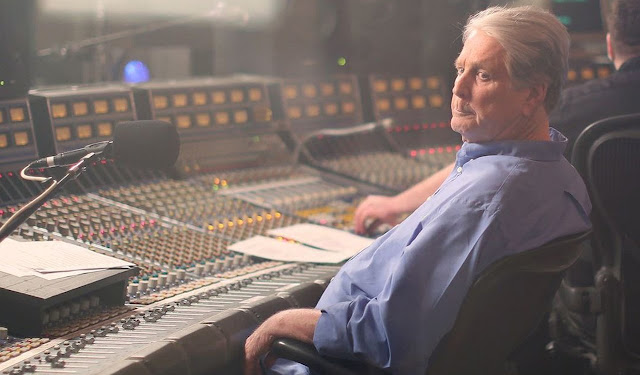
film review: Brian Wilson: Long Promised Road


Directed by Brent Wilson

ChinoKino score: B+

Review by Allan Tong

Five minutes into this new documentary about Brian Wilson, I thought, Oh, no, not another Brian bio. The opening sings the praises of the genius behind the 1966 masterpiece, Pet Sounds, how his songs fueled The Beach Boys' rise to stardom, and he has forever left his mark on popular music. As a Brian fan, sure, I agree with all that, but I've also heard this before in other docs.

Then, Long Promised Road takes viewers on a different ride. Literally. The rise is with Brian and longtime friend Jason Fine who get in a car and drive to Brian's old haunts around Los Angeles as they spin tunes by the Beach Boys (as a group and individually), and Brian reminisces. This is the key to the film where Brian opens up about his troubled family, marriage, career, and personal and legal battles. Now, this is new. The film captures the shy Brian unguarded through a camera resting unobtrusively on the car's dashboard. Fine first met Brian as a journalist profiling the musician for Rolling Stone magazine, and they've remained buddies ever since. Fine gently coaxes unfiltered thoughts and reactions out of Brian that will surprise casual and hardcore fans alike.

The ride covers the usual bases, starting with Brian's abusive father. The film excerpts an infamous 1965 studio clash between (drunk, belligerent) father and son during the recording of Help Me, Rhonda and stops outside his childhood home. Here, a wall sculpture now honours his band. The ride takes him to his old luxury home, where folks like Sly Stone dropped in (and passed out after getting stoned). The ride goes to more innocent places, like Paradise Cove where the Beach Boys posed for the cover of their first album (a plaque now marks the spot). Through it all, Brian makes unguarded reflections, great and small, about his career highs, disappointments, battles with mental illness, drug use, and his love for his brothers. These are simply the highlights of this film.

The most revealing moment comes when Fine informs Brian that former Beach Boys' manager, Jack Rieley died a few years ago. Brian is speechless, stunned, and tears well in his eyes as he processes the stunning news. After some heavy pauses, Brian announces that his heart is broken--and we feel for him.

Unnecessarily, the film cuts away to Brian's famous admirers (Bruce Springsteen, Elton John, Linda Perry, Taylor Hawkins, Don Was) to tell us how great Brian's music is. This interrupts the flow of Brian's ride and adds little to our overall understanding of him. Granted, these stars say nothing inaccurate, and it's a thrill to hear Sir Elton recall going ga-ga over his idol when they met in the 1970's.

Another issue with the film is that it meanders, also jumping back to Brian rehearsing and performing with his current band. I get it: Brian remains an active, creative artist to this day, but again these jumps break up the film's overall flow and don't build up to anything.

However, vintage film clips are chosen well. One interesting clip is an early interview with the young Beach Boys where brother Dennis flirts with a female interviewer. This nicely detours into a sequence centering on the handsome bad boy, and Brian explains how close they were. Cocaine was one bond, but it went deeper than that. One commentator points out that playboy Dennis and introverted Brian secretly envied each other, though the film glosses over Dennis' battles with addiction which eventually killed him at age 39.

Finally, the film deserves credit for exploring the theme of mental illness with sensitivity. Brian has long suffered from schizoaffective disorder, in which he hears bad voices in his head and wrestles with periodic depression. A link between his father's abuse (mental as well as physical) is strongly implied. This disorder to is stated at the start of this film and colours everything we then see. Brian's condition led to disgraced therapist Eugene Landy taking over Brian's life and even career in the 1970's through the early 1990's, until Brian successfully sued him. Landy (who died in 2006) is seen only in still photos, thankfully.

In the end, you admire Brian for surviving his long, hellish journey to somehow keep making music while also raising five adopted children. (We briefly see his two daughters from his first marriage.) Director Wilson (no relation to Brian) indeed takes us on a journey through the wonderful, harrowing and unique life of a special musician.

Brian Wilson: Long Promised Road is now available on VOD.

Friday, May 7, 2021

film review: Street Gang: How We Got To Sesame Street


Directed by Marilyn Agrelo

ChinoKino score: A

Review by Allan Tong

Chances are you grew up watching Sesame Street and/or your children watch it now. Its blend of entertainment and education charms pre-schoolers into teaching them the alphabet and counting, and yet is smart enough to entice grown-ups. Sesame Street deserves to be a global phenomenon for the last 52 years and 4,561 episodes (and counting), and this superb documentary explains how this happen.

Circle back to the late-1960s when a TV producer named Joan Ganz Cooney and a Carnegie Foundation exec and psychologist, Lloyd Morrisset, were alarmed that children, especially Black ghetto kids, knew how to sing beer commercials before they could recite the alphabet. Why not use the power of TV to educate? That was a revolutionary idea, but also a gamble. Ganz gave free reign to free-spirited creatives, who were riding the experimental vibe of the sixties. They were led by director Jon Stone and puppeteer Jim Henson.

Stone was disillusioned with TV, but like Cooney was an activist and understood her vision for this show. Stone saw a PSA shot in the streets of Harlem and decided to set the series on those stoops, which gave the show an identity light years from any previous children's show. Going further, the show featured a multiracial cast of Blacks, Latinos and whites that was revolutionary for its time and (sadly) decades to come. Stone's masterstroke was inviting Henson to come on board. Actually, Henson had only done puppetry for adults on TV, but was game to adjust for children.

Throw in a mix of dazzling animation, Big Bird and hip musical guests from Stevie Wonder to Johnny Cash, and Sesame Street became an instant smash. Even folks like Muhammad Ali were signing its praises.

Monday, May 3, 2021

film review: Chinatown Rising


Directed by Harry Chuck & Josh Chuck

ChinoKino score: A

Review by Allan Tong

Though it was completed before Covid struck, Chinatown Rising couldn't be more timely. Racist attacks against Asians, particularly those of Chinese descent, have erupted across the United States and Canada. Asians are being scapegoated for the pandemic, but Asians are now fighting back, and they can draw inspiration from the earlier generation, depicted in this riveting documentary.

Co-director Harry Chuck was a film student and community activist in the turbulent 1960s. He was part of that generation that grew up after the Chinese Exclusion Act and were no longer afraid of keeping quiet. This younger generation was inspired by the Black Civil Rights and anti-Vietnam War movements. Their turning point came in 1965, when the U.S. liberalized immigration policies and many more Chinese were allowed into the country (the Exclusion Act had forbidden it). In 1969, the activists demanded a school at the San Francisco State College to teach the contribution of the Chinese community. Also, they wanted Chinese to be used in classrooms in order to teach younger immigrant kids. They clashed with the Six Companies, a group of Chinatown elders whom they felt were out of touch and ineffectual.

The activists demonstrated in the streets, sometimes battling the police, and they fought city hall. Victories came, but not easily. The activists also worked hands-on within the community, particularly to stem the rise of street gangs, fed by kids who didn't assimilate and turned to crime. Tragically, they likely killed the head of the Youth Services Center, Barry Fong-Torres (brother of celebrated Rolling Stone magazine writer Ben Fong-Torres). Also in the 1970s, activists demanded better housing for the elderly and young families. Thankfully, Chuck captured these squalid conditions on camera which were presented at a rancorous city hall debate.

Sunday, February 28, 2021

What to watch this week: Pelé, Tokyo Girl, Creem magazine


Tokyo Girl

reviews by Allan Tong 

TOKYO GIRL (on Prime)

ChinoKino score: A

Tokyo Girl would kick Emily in Paris' ass in a Superbowl game.

Tokyo Girl is a Prime series about a smalltown girl who finds her dreams working in fashion in the big city, while Emily in Paris, the Netflix hit, follows a Chicago girl who trimphs in the European culture capital through her Instagram account. Both heroines are fishes out of water, bore wear gorgeous clothes and they dine in dazzling restaurants with lovers and backstabbing colleagues.

After watching Emily in Paris, I remember gorgeous Paris and posh clothes. After watching Tokyo Girl I remember work triumphs, everyday struggles and broken relationships. I remember watching a real person mature.

This comparison, I admit, can go only so far. Emily is told in real time while Tokyo Girl spans nearly 20 years in the heroine's life. Also, Emily is lighter while TG mixes drama with laughs.

Both shows are helmed by strong actresses, though. Emily takes a lot slagging for being an American philistine, but Lily Collins nails the role. Collins injects her character with unexpected vulnerability at times. (A shout-out goes to Philippine Leroy-Beaulieu who nails Emily's bitch boss.) Asami Mizukawa (pictured above) has a tougher gig in Tokyo Girl, portraying how smalltown girl Aya turns into career woman Aya by age 40, when she wonders what th hell she'll do next with her life. Mizukawa pulls it off.

TG's writing is tougher, smarter and more complex. Guys need to watch this show to understand women better. Emily, in contrast, overdoses on gee-whiz sweetness that would kill a diabetic. But, hey, Paris, is dazzling.

The call: Tokyo Girl by 14 points.


PELÉ (on Netflix)

ChinoKino score: B

Before Michael Jordan and Wayne Gretzky, there was Pelé. This kid from the slums of Sao Paulo shot to football (soccer) superstardom and put Brazil atop the football map. This doc covers the meat of his career, playing for Santos and leading Brazil to three World Cups, from 1958 to 1970.

Those years were a hell of a ride that lifted Brazilian national pride and made Pelé a rock star. Goals, goals, goals. There's an endless stream of Pelé making acrobatic moves on the football pitch, drawn from vintage black-and-white footage and grainy colour. This doc is thrilling to watch, and captures a lot of Pelé's former teammates and coaches on camera recounting their victories and struggles.

Pelé himself, now 80, tells a lot of his story. He needs a walker these days, undoubtedly a result of many years of taking cheap shots from less-talented opponents. Yet, he still speaks with a sparkle in his eye. All great. However, the issue of him never opposing Brazil's dictator, who imprisoned and murdered his countrymen from 1964 to 1985, is thorny. Credit this film for including Pelé's critics as as well as offering Pelé's own justification for keeping his nose out of politics. Maybe we expect too much from our athletic heroes (Jordan and Gretzky were also apolitical, not Ali), but I winced when Pelé hugs the country's butcher after the 1970 World Cup victory.

Friday, February 19, 2021

What to watch tonight on Netflix, Prime & Crave


reviews by Allan Tong 


THE CROWN (on Netflix)

ChinoKino score: A+

A dramatic series about a rich English family who live in big houses with servants, and they can't stand each other's spouses. The Crown covers the second half of Britain's 20th century and the latest season explores the slick, big-shouldered 1980s. This season (arguably the best) features a powerful woman named Thatcher (brilliantly played by that redhead from X-Files, Gillian Anderson) who bosses a lot of wimpy men around, even though she herself doesn't like women. Thatcher must be a cokehead, because she perpetually speaks as if she has something stuck up her nose.

Meanwhile, the rich family is thoroughly miserable, though they live in really nice palace and millions of people love them, especially the blonde princess, Diana.

The show hits a grand slam in every department: writing, acting, directing. By now, everyone on the planet including the Pope has seen The Crown, so if you haven't, what are you waiting for?


FLACK (on Prime)

ChinoKino score: A-

Canadian Anna Paquin, heads a quartet of spin doctors (Latin for bullshit) in London who rescue their showbiz clients from all kinds of emergencies they get themselves into, whether it's obnoxious behaviour on a transatlantic fight, faking a lesbian sex tape, or a gay hooker OD'ing in a hotel room. The irony is that Robyn is a bigger screw-up than all her clients while her colleagues are no better.

Tuesday, May 12, 2020

film review: Les Misérables


Directed by Ladj Ly

Written by Ladj Ly & Giordano Gederlini

ChinoKino score: A-

Review by Allan Tong

The great French novelist Victor Hugo set Les Misérables in the Parisian suburb of Montfermeil, where this drama occurs a century-and-a-half later. Both stories examine the downtrodden of France's capital, but today those poor are mostly angry black kids in hoodies with few prospects or male adult role models. Enter good cop Stéphane (Damien Bonnard seen in Dunkirk) who joins the Anti-Crime Brigade in Montfermeil. He learns the ropes of this rough area by riding with Chris (Alexis Manenti, center in picture above) and Gwada (Djibril Zonga, right in picture), two veteran, jaded and hardass cops.

Hardass, because Chris (a nasty white cop) and Gwada (black, who grew up in the 'hood) apply the toughlove approach to their policing, like harassing a cute teenage girl in front of her friends, or roughing up young men just to keep them in line. That's all in a day's work. Stéphane bristles at their approach, but the veterans believe you gotta be tough to survive in Montfermeil. After all, the police are tiptoeing in gang territory.

Things turn bad when a troublemaking kid, Issa, steals a baby lion from a gypsy circus. The gypsies accuse a local black gang of harbouring Issa (Issa Perica), so the pressure is on to locate the lion and protect the child from retribution. To keep this powder keg from exploding, the three cops get sucked into this search, but ultimately their efforts backfire. [To avoid spoilers, let's leave the synopsis at this.]

Monday, August 19, 2019

film review: Aquarela


Directed by Victor Kossakovsky

ChinoKino score: B

Review by Allan Tong

Aquarela is Portuguese for "watercolour" and an apt title for a 90-minute visual essay about the power of water. Think of the Koyaanisqatsi films, visual feasts portraying nature without any narration or characters. These are films you have to watch on a big screen, unless your home movie theatre backs out into a drive-in.